What Are the Typical Dimensions of Interior Doors? — Standard Size Guide by Chantadoor
When planning residential or commercial projects, one of the most common questions customers ask is: “What are the typical dimensions of interior doors?” Door size is a critical factor affecting functionality, aesthetics, accessibility, and installation efficiency. At Chantadoor, a professional manufacturer specializing in door research, development, production, and global sales, we provide both standard and customized interior door solutions for international markets.
1. Why Interior Door Dimensions Matter
Interior door dimensions directly influence:
- Room accessibility
- Furniture movement
- Sound insulation performance
- Space utilization
- Building code compliance
Industry studies show that standardized door dimensions can reduce installation errors by nearly 25% and improve construction efficiency in large-scale housing projects.
Because building standards differ across countries and regions, interior door sizes vary slightly between markets. However, several dimensions are commonly used worldwide.
2. Standard Interior Door Widths
The most common interior door widths include:
- 24 inches (610 mm) — often used for bathrooms or small spaces
- 28 inches (710 mm) — suitable for compact bedrooms
- 30 inches (760 mm) — one of the most common residential sizes
- 32 inches (810 mm) — frequently used in modern homes
- 36 inches (910 mm) — preferred for accessibility and commercial spaces
According to North American construction standards, 30-inch and 32-inch doors account for over 60% of residential interior door installations.
3. Standard Interior Door Heights
The typical interior door height in most markets is:
- 80 inches (2032 mm)
This size is widely used in residential projects because it balances appearance, ventilation, and manufacturing efficiency.
In premium or luxury projects, taller doors are becoming increasingly popular:
- 84 inches (2134 mm)
- 96 inches (2438 mm)
Industry trend reports show that oversized interior doors have grown by nearly 15% annually in modern luxury residential developments.
4. Standard Door Thickness
Door thickness affects durability, sound insulation, and hardware compatibility.
Typical interior door thickness includes:
- 35 mm (1-3/8 inches) — standard residential doors
- 40–45 mm — solid core or soundproof doors
- 50 mm or more — specialized acoustic or fire-rated doors
Research indicates that thicker solid-core doors can improve sound insulation performance by up to 30–40% compared with lightweight hollow-core doors.
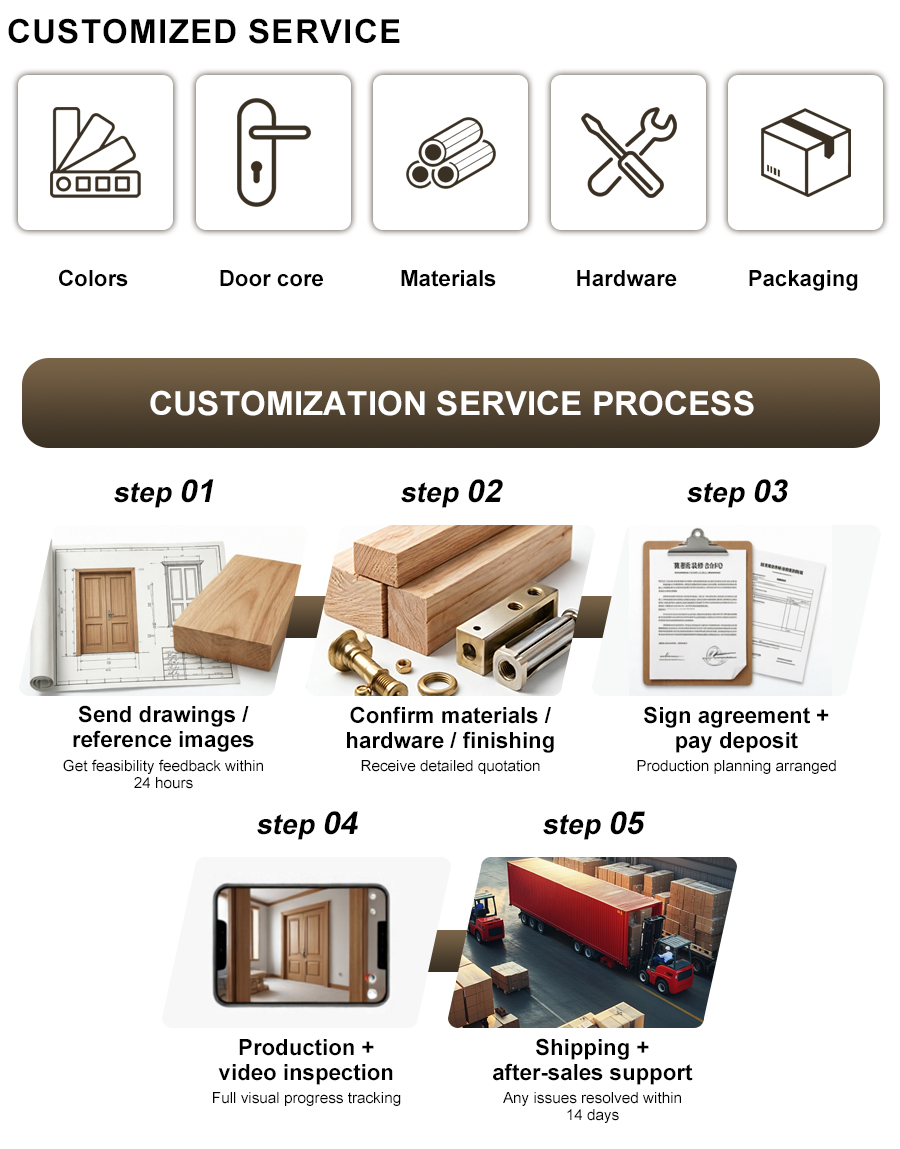
5. Customized Door Sizes Are Increasingly Popular
Although standard dimensions dominate the market, customization demand continues to grow rapidly.
At Chantadoor, more than 70% of international commercial projects request some level of customization, including:
- Oversized doors
- Double-leaf doors
- Non-standard widths
- Hidden or flush door systems
Customized solutions are especially common in:
- Hotels
- Luxury villas
- Office buildings
- Modern apartments
6. Chantadoor’s Interior Door Solutions
At Chantadoor, we manufacture a wide range of interior door sizes using:
- Solid core structures
- Engineered wood cores
- Paint-free PVC and melamine finishes
- Customized acoustic and waterproof solutions
Our production system supports:
- Standard international dimensions
- OEM and ODM customization
- Project-based manufacturing
- Precision size control and quality inspection
Final Thoughts
So, what are the typical dimensions of interior doors? Standard interior doors are commonly available in widths from 24 to 36 inches, heights around 80 inches, and thicknesses between 35–45 mm. However, modern construction increasingly demands customized solutions tailored to architectural design and functional requirements.
At Chantadoor, we combine advanced manufacturing technology with flexible customization capabilities to provide durable, high-quality interior doors for residential and commercial projects worldwide. Whether you need standard doors or fully customized solutions, Chantadoor is committed to delivering precision, reliability, and long-term value.